

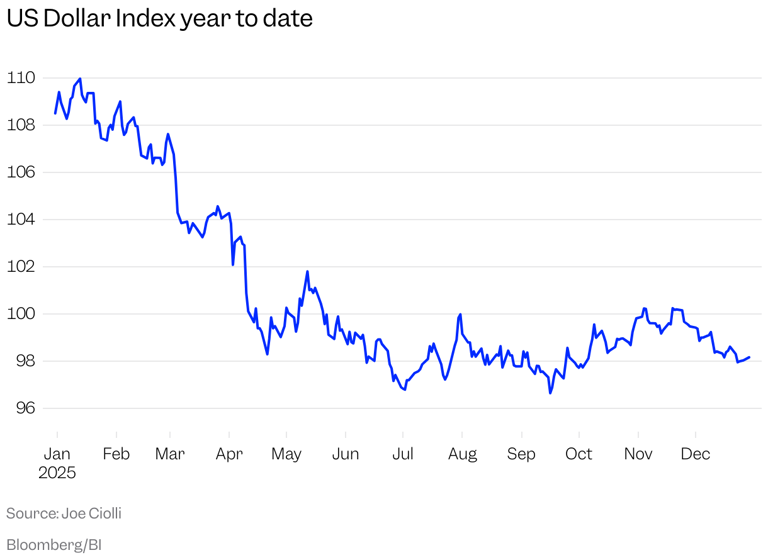
The U.S. Dollar Index (USDX) declined by approximately 10% in 2025, marking its lowest level in over five decades. The dollar weakened against all major global currencies during the year, reflecting heightened vulnerability despite its historical dominance. This depreciation was primarily driven by multiple factors, including the Federal Reserve’s repeated interest rate cuts and increased trade policy uncertainty.
Key Drivers
- Monetary Policy: Successive rate reductions by the Federal Reserve diminished the attractiveness of dollar-denominated assets, exerting downward pressure on the currency.
- Trade Policy: Proposed tariff measures earlier in the year amplified market uncertainty, negatively influencing investor sentiment toward the dollar.
- Structural Shifts: Efforts by the BRICS bloc to promote local currency trade and alternative payment systems have challenged dollar reliance, though progress remains constrained by weak institutional frameworks.
Credit Risk Implications
Currency volatility introduces significant risk in cross-border transactions. A weaker dollar can:
- Increase Payment Risk: For buyers whose local currency depreciates against the dollar, debt burdens rise, potentially leading to delayed payments, delivery refusals, or defaults.
- Elevate Import Costs: Import-dependent firms face higher costs, which may compress margins and strain liquidity.
- Amplify Inflationary Pressures: Rising costs can contribute to inflation, weakening financial stability in certain markets.
Conversely, dollar weakness can benefit U.S. exporters by improving price competitiveness. In the nine months through September, U.S. exports increased by 5% year-over-year to $125 billion, supporting revenue growth in agriculture, commodities, and manufacturing sectors.
Continued dollar weakness may support export-driven growth for U.S. firms, but it also heightens credit risk for import-dependent businesses and those with unhedged foreign-currency obligations. Understanding dollar fluctuations is critical, especially given that the global financial system remains heavily reliant on a single country’s currency and policy decisions.